
Roofing in Natalia, TX: Roof Care for Small-Town and Rural Homes
· By Andres Alanis, Alanis Roofing
Natalia is a small town in Medina County, just off I-35 between Lytle and Devine. It grew up in the early 1900s around farmland served by the Medina irrigation system, and it still has a quiet, rural feel, with homes on larger lots, farm properties and outbuildings scattered around town.
In a town like Natalia, a roof is not only about the house. Many properties also have a barn, a shop, a carport or a manufactured home, and each needs attention. This guide covers what the weather does, what roof types are common, how to handle repairs and when to think about replacement.
Sun is the slow, steady roof killer
Hailstorms get the headlines, but day-to-day sun and heat do the most damage to roofs in Natalia. Long summers dry out asphalt shingles, cause rubber pipe boots and seals to crack, and fade and weaken older roofing materials. On metal roofs, heat makes panels expand and contract every day, which slowly loosens fasteners.
Ventilation helps a lot. Turbine vents, ridge vents and attic fans let hot air escape the attic, which keeps the roof deck cooler and the house more comfortable. If your turbines are stuck or noisy, that is worth fixing.
Ventilation needs both an exhaust at the top and intake at the bottom, usually through vents in the soffits. If the soffit vents are painted over or blocked by insulation, even the best turbine cannot move much air. A quick look in the attic on a hot afternoon tells you a lot: if it feels like an oven, the roof is paying for it.
Spring storms, hail and wind
From early spring into summer, thunderstorms can bring hail, strong wind and sudden heavy rain. Open land around Natalia means wind hits buildings with little to slow it down. Loose metal panels, lifted shingles and poorly secured carports are the first things to go.
After a storm, walk around every building on your property. Look for dents on gutters, vents and AC units, pieces of shingle or trim on the ground, and panels that look out of line. Inside, check ceilings and the attic for wet spots. If you find damage and rain is coming, a temporary tarp or emergency repair can prevent much bigger problems.
Roofs you see around Natalia
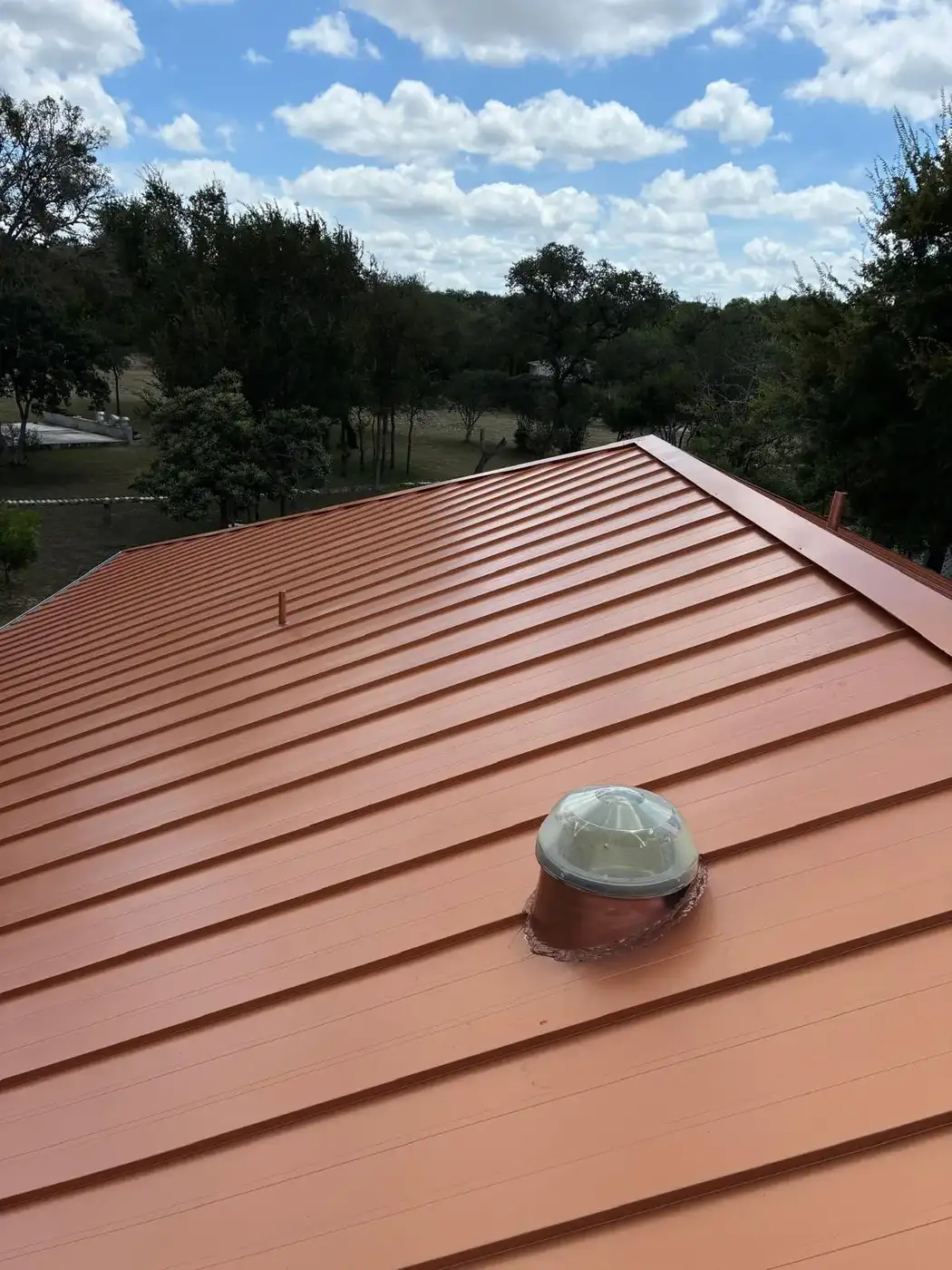
Homes in town are often simple gable or hip roofs with asphalt shingles, and many rural homes and nearly all outbuildings use metal. Manufactured homes are common in the area as well, often with low-slope roofs that need different care than a steep shingle roof.
Low-slope roofs drain slowly, so seams and edges need to stay sealed. Roll roofing and coatings are common fixes, and in some cases a new roof system over properly built framing is the long-term answer. Each situation is different, so it helps to have someone look before deciding.
Carports and porch roofs deserve attention too. They are often built with lighter framing and metal panels, and they catch wind like a sail. Making sure posts are anchored and panels are fastened well can keep a carport roof from ending up in the neighbor's pasture after a storm.
Repair or replace in a small-town budget
Not every leak means a new roof. A cracked pipe boot, a few blown-off shingles, worn screws on a metal roof or a gap in flashing can usually be repaired for far less than a replacement. An honest roofer should tell you when a repair is enough.
It also helps to fix small problems quickly. A leak that runs for a season can soak insulation, rot decking and stain ceilings, turning a simple repair into a bigger job. If you notice a drip, a stain or a missing piece of roofing, get it looked at before the next heavy rain.
Replacement makes more sense when the roof is old, leaks in several places, has widespread granule loss or rust, or has soft spots in the decking. On a tight budget, some owners replace the house roof first and plan the barn or shop later. Alanis Roofing accepts cash, check and Zelle; financing is not offered, so planning the work in stages can help.
When you get an estimate, ask the roofer to separate what is urgent from what can wait. A clear list, with the reasons for each item, makes it much easier to plan and keeps you from paying for work you do not need yet.
A seasonal checklist for Natalia properties
February and March: check all roofs before storm season, clear gutters, tighten or replace loose metal fasteners and secure carports. April through June: inspect after every hailstorm or strong wind. July and August: check attic vents and turbines. October and November: clear leaves and debris and reseal anything that dried out over the summer.
Before any major replacement, check with the City of Natalia or Medina County about permit requirements, and with your HOA if you have one.
How to get help with your roof in Natalia
Natalia is only a few minutes from our base in Devine, so same-day response is common. Estimates are free with no trip fee. Andres Alanis looks at the roof himself and explains what he finds in English or Spanish. If water is coming in, emergency calls are answered 24/7.
Frequently asked questions
- Do you work on low-slope roofs in Natalia?
- Yes. We install roll roofing and TPO on low-slope roofs like porches, additions and carports. Each one is different, so we inspect first and then explain the repair or replacement options.
- My turbine vent stopped spinning. Does it matter?
- It can. Turbines help hot air leave the attic. A stuck turbine reduces ventilation, which can make the attic hotter and age the roof faster. It is usually a simple fix.
- Can I replace the house roof now and the barn later?
- Yes. Many owners plan work in stages. We can estimate both and tell you which is more urgent.
- What forms of payment do you accept?
- Cash, check and Zelle. We do not offer financing. Call or text (210) 318-9811 for a free estimate.
Related services
Found this helpful? Make us a preferred source on Google.
Want a real number for your roof?
Andres comes out, looks at your roof and gives you a free estimate. No visit fee, same-day reply.