
Roofing in Uvalde, TX: A Guide for Hot, Dry Southwest Texas
· By Andres Alanis, Alanis Roofing
Uvalde is the seat of Uvalde County, on US 90 roughly 80 miles west of San Antonio. It sits where the southern edge of the Hill Country meets the brush country, near the Leona and Nueces rivers, and it serves as a hub for ranches across a wide area. The town was once known as the Honey Capital of the World and is the hometown of John Nance Garner, vice president under Franklin Roosevelt.
Uvalde is farther from our base than most of our service area, but it shares the same South Texas roof challenges, with even more sun and heat. This guide explains what that means for homes in town and on ranches, which materials hold up best, and how to keep a roof in good shape.
A hotter, drier climate is hard on roofs
Uvalde tends to be drier than San Antonio, with a lot of clear, sunny days and very hot summers. Constant UV exposure and heat age roofing faster: shingles lose their oils and granules, sealants crack, and the rubber boots around plumbing vents split. A roof that might last a long time in a milder climate can wear out sooner here.
Because rain is less frequent, small roof problems can go unnoticed for months. Then a strong storm arrives, dumps a lot of water quickly, and an old crack becomes a leak. Checking the roof during the dry months, before storms come, is the smart move.
Dust and wind-blown debris are part of life in a dry climate too. Dust collects in gutters and valleys and mixes with leaves into a heavy sludge that holds water against the roof edge. Clearing gutters a couple of times a year keeps water moving where it should.
Swamp coolers and rooftop equipment, still found on some older homes in the area, add another source of leaks. The curb and flashing around rooftop units should be checked every year, along with any lines that run across the roof.
Sudden storms off the Hill Country
Spring and early summer storms can build quickly over the hills to the north and move across the plains with hail, strong wind and intense rain. Hail can dent metal and bruise shingles, and wind can lift loose panels and shingle edges.
After a storm, check for dents on vents, gutters and AC units, debris on the roof and stains on ceilings. On ranch properties, check barns, sheds and equipment covers too, since damage there often goes unnoticed.
Metal roofing in ranch country
Metal is a natural fit for Uvalde and the ranch land around it. It handles heat and sun well, sheds rain quickly and holds up to wind when properly fastened. Lighter colors and galvalume finishes reflect more sunlight, which can help keep the attic cooler.
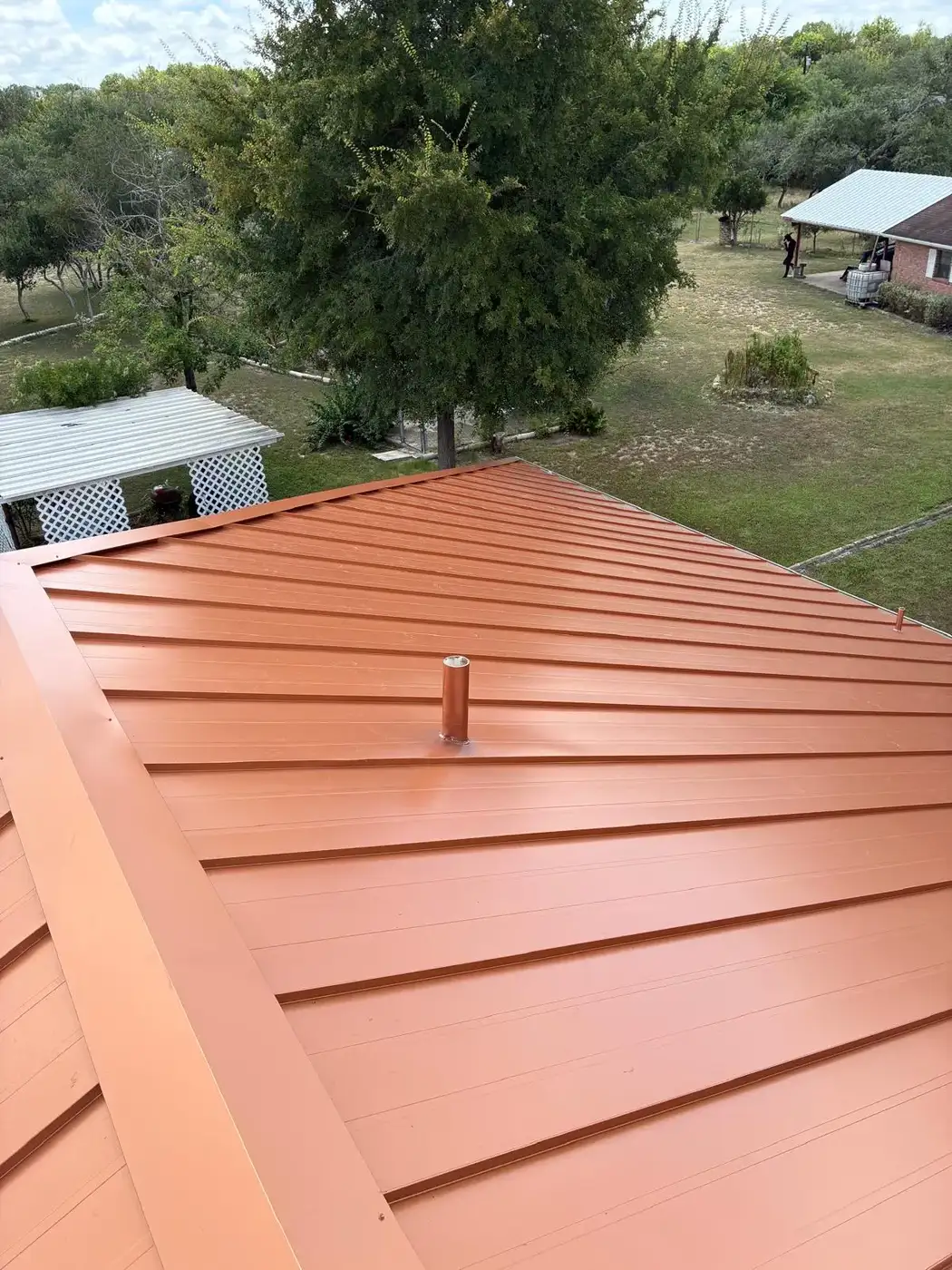
Standing seam metal is a popular choice for homes because of its clean lines and hidden fasteners. R-panel is a common, economical option for barns, shops and covered parking. Earth tones like terracotta, bronze and tan suit the landscape and many ranch-style homes.
Fastening matters as much as the panel. In open ranch country, metal roofs need the right fastener spacing at the edges and ridge, where wind pulls hardest, along with closures and trim that keep wind-driven rain and dust out. Those details are what separate a metal roof that stays quiet and tight for decades from one that starts rattling after a few storms.
Shingles for homes in town
Many homes in town have asphalt shingle roofs, and 30-year architectural shingles are a good, more affordable choice when replacing them. In a hot climate, lighter shingle colors and good attic ventilation make a real difference in how long the roof lasts.
Ventilation should be part of any shingle replacement: intake at the eaves and exhaust near the ridge with ridge vents, turbines or attic fans. Without it, heat builds up under the shingles and shortens their life.
When comparing estimates, make sure each one covers the same things: tear-off of the old roof, replacement of damaged decking, underlayment, new pipe boots and flashing, ventilation and cleanup. A low price that skips those items is not really cheaper.
Maintenance and local rules
Twice a year, ideally in late winter and early fall, look over the roof for cracked pipe boots, lifted shingles, loose metal fasteners and worn sealant. Clean gutters, especially if you have pecan or live oak trees nearby. Make sure attic vents are working.
Before a replacement, check with the City of Uvalde or Uvalde County about permit requirements, and with your HOA if your neighborhood has one.
Getting an estimate in Uvalde
Alanis Roofing serves South Texas from Devine and travels to Uvalde for roofing work. Estimates are free with no trip fee. Because Uvalde is a longer drive, it helps to call or text first with photos and a short description so we can plan the visit. Andres Alanis handles estimates himself in English or Spanish, and emergency calls are answered 24/7.
Frequently asked questions
- Do you really travel to Uvalde?
- Yes. We serve South Texas from our base in Devine. Call or text (210) 318-9811 with your address and a few photos so we can schedule a free estimate.
- What roof color is best for Uvalde's heat?
- Lighter colors and reflective metal finishes like galvalume absorb less heat than dark colors. Good attic ventilation matters just as much as color.
- Is metal or shingle better for a ranch house near Uvalde?
- Metal is very popular for ranch homes because it handles sun and wind well and matches outbuildings. Shingles cost less upfront. It depends on budget and how long you plan to stay.
- How often should I check my roof in a dry climate?
- At least twice a year and after any strong storm. Dry spells can hide small problems that show up as leaks once heavy rain arrives.
Related services
Serving
Found this helpful? Make us a preferred source on Google.
Want a real number for your roof?
Andres comes out, looks at your roof and gives you a free estimate. No visit fee, same-day reply.