
Standing Seam vs R-Panel Metal Roof: Which Should You Choose?
· By Andres Alanis, Alanis Roofing
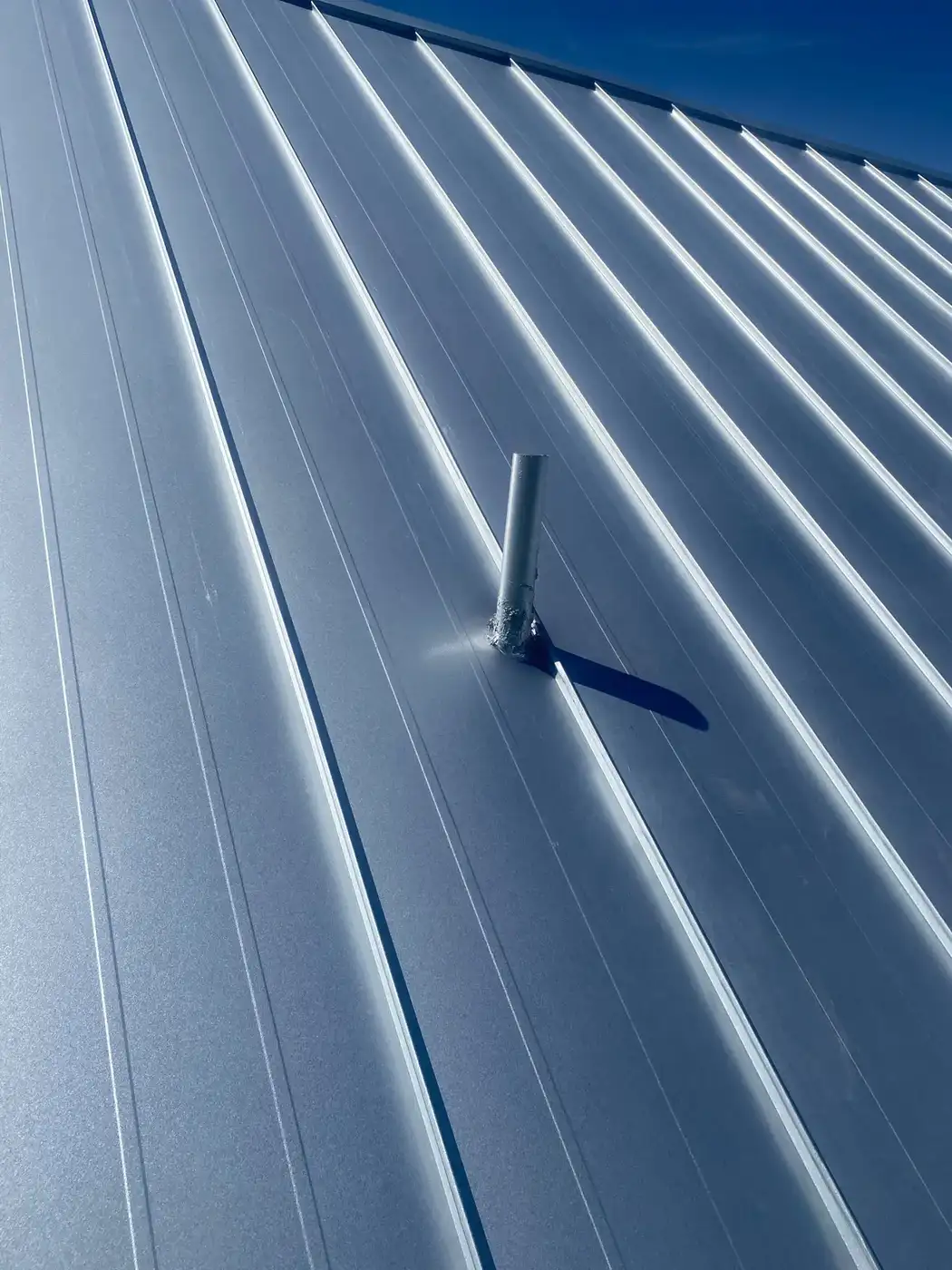
Once you decide on a metal roof, the next question is which kind. In South Texas, the two you will hear about most are standing seam and R-panel. From the road they can look alike, but the way they are built, the way they keep water out, and what they cost are quite different.
This guide explains how each system works, compares them on cost, leak risk, maintenance, looks and lifespan, and shows which one usually fits a home, a barn, a shop or a ranch building best.
What is R-panel?
R-panel is an exposed fastener metal roof. The panels have wide, raised ribs and are screwed directly through the face of the panel into the purlins or decking below. Each screw has a rubber washer that seals the hole.
R-panel is very common on barns, shops, carports and ranch homes across rural South Texas because it covers a lot of area quickly and at a lower cost than concealed fastener systems.
What is standing seam?
Standing seam is a concealed fastener system. The panels lock together along raised vertical seams, and they are attached with clips or fastening flanges that sit hidden under the seam. Nothing punches through the flat of the panel where water runs.
Standing seam has a clean, sharp look with straight lines from ridge to eave, and it is a favorite for homes where looks and long term performance matter most.
Cost
R-panel is usually the more budget friendly metal roof. The panels cost less, and installation is faster. For large buildings like barns and shops, that difference adds up quickly.
Standing seam typically costs more because of the panel material, the trim work around ridges, valleys, chimneys and dormers, and the labor needed to install it correctly. Exact prices depend on the roof, so a free estimate is the best way to compare the two for your building.
Leak risk and maintenance
This is the biggest practical difference. An R-panel roof has hundreds or thousands of screws going through the panels. Under South Texas sun, the rubber washers age and can crack over the years, and screws can loosen as the metal expands and contracts with daily heat. Each one is a possible leak, so exposed fastener roofs benefit from periodic checks and fastener replacement over their life.
Standing seam keeps its fasteners hidden and out of the water path, and the panels are designed to move with heat. That means fewer places for water to get in and less maintenance over time.
Looks and curb appeal
R-panel has a more rugged, agricultural look that fits barns, shops and ranch properties well. Standing seam reads more refined, with crisp lines that suit modern homes, stucco houses, brick ranch homes and anything where the roof is a big part of how the house looks.
Both come in a range of colors. Around here you will see silver galvalume, charcoal, red, terracotta, bronze and blue on both systems.
Lifespan
Both systems can last a long time when installed correctly. The panels themselves commonly outlast asphalt shingles by a wide margin. With R-panel, the weak point tends to be the fasteners and washers rather than the metal, which is why maintenance matters. Standing seam's concealed design generally gives it the edge for long term, low maintenance performance.
Heat, sun and South Texas weather
Metal expands as it heats up during the day and contracts as it cools at night. In a South Texas summer, that movement happens every single day. On an R-panel roof, the panels are pinned by screws through the face, so that daily movement works on the fasteners and can slowly enlarge the holes or loosen the screws. On a standing seam roof, the clips are designed to let the panels move, which takes that stress off.
For hail, thicker panels hold up better than thin ones on both systems. Light colors such as silver galvalume reflect more sun and help keep the attic cooler, while darker colors like charcoal and bronze absorb more heat but are popular for their look.
Details that make or break either roof
Whichever system you choose, the trim work decides how well the roof performs. Ridge caps, valleys, flashing around chimneys and walls, pipe boots around plumbing vents and drip edge at the eaves are where most metal roof leaks start when they are rushed.
Ask your roofer how they handle each of these on your building, what underlayment goes under the panels, and how the ridge will be vented. A good answer should be specific to your roof, not a sales pitch.
Which one fits your building?
R-panel is often the practical choice for barns, shops, sheds, carports and other outbuildings, or for a home where budget comes first and you are comfortable with some upkeep over the years.
Standing seam is often the better choice for your main home, especially if you plan to stay for a long time, want the cleanest look, or have a roof with valleys, dormers and chimneys where water management really counts.
Alanis Roofing installs both standing seam and R-panel roofs across Devine, Hondo, Uvalde, Natalia, San Antonio and the rest of South Texas. We can look at your building, explain the tradeoffs in plain English or Spanish, and price both so you can choose with real numbers.
Frequently asked questions
- Is standing seam better than R-panel?
- For most homes, standing seam performs better long term because its fasteners are hidden. R-panel costs less and is a practical choice for barns, shops and budget focused projects.
- Does an R-panel roof leak?
- It can, mostly at the screws, when rubber washers age or fasteners loosen. Periodic checks and fastener replacement help prevent those leaks.
- Why is standing seam more expensive?
- The panels, trim details and installation labor all cost more. In return you get concealed fasteners, fewer leak points and a cleaner look.
- Can I use R-panel on my house?
- Yes. Many ranch homes in South Texas have R-panel roofs. It works well if you are comfortable with some fastener maintenance over the years.
- Does Alanis Roofing install both types?
- Yes, both standing seam and R-panel. Call or text (210) 318-9811 for a free estimate.
Related services
Found this helpful? Make us a preferred source on Google.
Want a real number for your roof?
Andres comes out, looks at your roof and gives you a free estimate. No visit fee, same-day reply.