TPO vs Roll Roofing for a Flat Roof: Which One Fits Your Building in South Texas?
· By Andres Alanis, Alanis Roofing
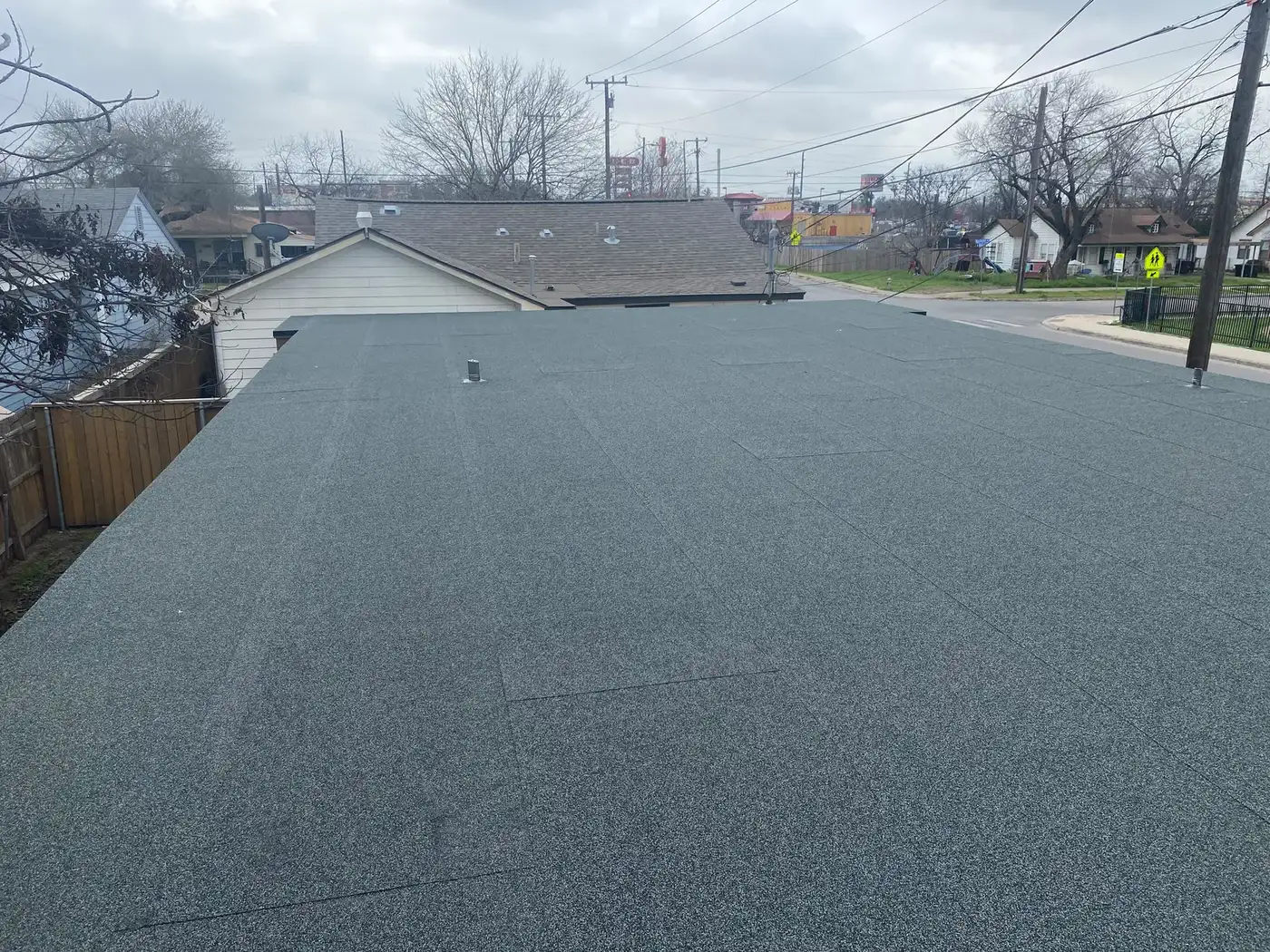
Flat and low-slope roofs are everywhere around San Antonio and the small towns south and west of it: shops, warehouses, porch additions, carports, the back half of older ranch homes. Shingles do not work on these roofs because water does not run off fast enough, so the choice usually comes down to two materials: roll roofing or a single-ply membrane like TPO.
Both can keep water out. They are just built for different budgets, different buildings and different time horizons. This guide explains how each one works, how they hold up in South Texas heat, what they typically cost and how to decide which one makes sense for your roof.
What roll roofing is, and where it works
Roll roofing is an asphalt product that comes in rolls, usually with a mineral granule surface similar to a shingle. It is rolled out across the deck, overlapped at the seams and fastened or sealed down. Some systems use a base sheet under the cap sheet for better performance.
Its biggest strengths are simplicity and price. It goes down fast, uses familiar materials and does not need specialized welding equipment. That makes it a common pick for sheds, barns, carports, porch roofs, small additions and commercial buildings where the owner wants a working roof at a low upfront cost.
The tradeoff is lifespan. Roll roofing is thinner than most other roofing systems, and the seams are its weak point. Many installations are expected to last somewhere around 5 to 12 years depending on the product, how many layers were used and how well the roof drains.
What TPO is, and why commercial buildings use it
TPO (thermoplastic polyolefin) is a single-ply membrane, usually white, that comes in wide sheets. The sheets are either mechanically fastened or adhered to insulation board, and the seams are joined with hot air welding so they fuse into one continuous surface instead of relying on adhesive or overlap alone.
Those welded seams are the main reason TPO is so popular on commercial flat roofs. A properly welded seam is often stronger than the sheet itself. TPO is also flexible enough to handle the expansion and contraction that come with big temperature swings.
With good installation and basic maintenance, many TPO roofs are expected to last roughly 15 to 25 years or more, depending on membrane thickness, exposure and how well water drains off the roof.
How each one handles South Texas heat and sun
This is where TPO pulls ahead for a lot of buildings in our area. A white TPO membrane reflects a large share of the sun's energy instead of absorbing it. On a long July afternoon in San Antonio or Hondo, a reflective roof can run much cooler on the surface than a dark one, and that often means less heat pushed down into the building below.
Roll roofing is usually dark or granule covered, so it absorbs more heat. Years of strong UV and summer heat dry asphalt out over time, and that is a big part of why roll roofing tends to crack and wear sooner here than in milder climates.
Neither material loves standing water. If your flat roof holds puddles for days after a storm, that drainage issue needs to be addressed during the job no matter which material you pick.
Typical cost ranges, in general terms
Prices vary with the size of the roof, how many layers have to come off, the condition of the deck, insulation, edge metal and access. As a broad market guide, roll roofing is usually the cheapest flat roof option per square foot, and TPO commonly costs noticeably more because of the insulation board, membrane and welding work involved.
Many owners find that TPO costs more upfront but less per year of service, since it may last two or three times longer. Roll roofing can make more sense when the budget is tight, the building is secondary, or you plan to replace or change the structure in a few years.
The only number you can plan around is one based on your actual roof. A free on-site estimate looks at the deck, drainage and existing layers before giving you a price.
Which one fits your roof: a quick guide
Roll roofing usually fits: sheds, barns, carports, small porch roofs, low-traffic outbuildings, and short-term needs where low upfront cost matters most.
TPO usually fits: commercial buildings, larger flat sections on homes, roofs over living space where heat gain matters, and owners who want the longest service life and the fewest seams to worry about.
If the roof is low-slope rather than truly flat, there may be other choices too, including metal panels in some cases. A roofer who installs more than one system can walk you through the options honestly instead of pushing the one product they happen to sell.
How we approach flat roofs at Alanis Roofing
We install both roll roofing and TPO on homes and commercial buildings across San Antonio and South Texas, from Devine and Lytle to Castroville and Uvalde. Before recommending either, Andres looks at how the roof drains, what is under the current surface and how the building is used.
The estimate is free and there is no fee for the visit. If roll roofing is the right call for your budget, we will say so. If TPO will save you money over the next decade, we will explain why in plain terms.
Frequently asked questions
- Is TPO better than roll roofing?
- For most commercial roofs and flat sections over living space, TPO usually performs better because of its welded seams, reflective surface and longer expected lifespan. Roll roofing is still a reasonable choice for sheds, carports and tight budgets.
- How long does roll roofing last in Texas?
- Many roll roofing installations last somewhere around 5 to 12 years. Strong sun, heat and poor drainage tend to shorten that, which is common in South Texas.
- Can TPO go over an existing roll roofing roof?
- Sometimes, depending on the condition of the existing roof, the number of layers already in place and local requirements. In many cases tearing off to the deck is the better option so damaged areas can be found and fixed.
- Does a white TPO roof really keep a building cooler?
- A white reflective membrane generally stays cooler on the surface than a dark roof in direct sun, which can reduce heat gain into the building. How much it helps depends on insulation and ventilation below.
- Do you install flat roofs on homes or only commercial buildings?
- Both. Alanis Roofing installs roll roofing and TPO on homes, additions, porches and commercial buildings. Call (210) 318-9811 for a free estimate.
Related services
Found this helpful? Make us a preferred source on Google.
Want a real number for your roof?
Andres comes out, looks at your roof and gives you a free estimate. No visit fee, same-day reply.